The Rundown: MLB Could Seek to Outlaw HS Draft Eligibility, Hoerner Not Top-100 Player, Rangers Acquire Gore

I hope everyone in the Midwest and farther east is ready for the big winter storm that’s about to sweep through. Gotta love having 60 degrees on Christmas, then dropping to negative temps with tons of snow a month or so later. Just make sure you avoid those exploding trees, something I thought was only possible as the result of a starkblast in Mid-World.
Those who follow baseball closely know there’s another storm brewing on the labor front, one that could leave the players frozen out in 2027. Most of the talk to this point has centered around the owners’ strong desire to implement a salary cap, which could distract from other points of contention. One of those is an attempt to shorten the draft to 15 or even 10 rounds, along with potentially eliminating prep eligibility.
Such moves would send shockwaves through a college game that has already changed dramatically with the advent of NIL. Bigger D1 programs have set themselves up as big league teams, with smaller schools/divisions serving as their minor league affiliates. Speaking of which, that linked article above from Joe Doyle at Over-Slot also notes that owners would like phase out the A-ball level by 2030.
One scout I spoke with confirmed that the buzz in the industry matches up with what Doyle wrote, and that some believe owners are trying to do away with scouts altogether. We’ve already seen a move in that direction, with the Cubs and other teams eliminating a lot of travel in favor of video and statistical review. Part of that is due to the broad availability of game tape and data on players, but teams still need to have a way to get eyes on high school talent.
Unless, of course, that talent is no longer eligible to be drafted. In addition to trimming their expenses by riffing most or all area scouts, organizations can save millions a year by making the draft pool that much shallower. Consider that 15 of the 32 first-round picks (two comp selections) came out of high school, including two of the top four selections. Pedigree darling Ethan Holliday landed the largest bonus in his class, getting $9 million from the Rockies.
That was slightly higher than the pick’s $8.77 million slot value, but the two college players drafted before Holliday and the two taken after all signed underslot deals. Those four bonuses alone accounted for roughly $4.5 million in savings, and surpluses would typically fund overslot payments to buy subsequent prep picks out of their college commitments. For instance, the Cubs used their savings on college picks Ethan Conrad (1), Kane Kepley (2), Dominick Reid (4), and Kade Snell (5) to help fund larger bonuses for Kaleb Wing (4) and Josiah Harsthorn (6).
Moving to a college-only draft gives teams far greater leverage over their picks without having to worry about paying more for those overslot deals. Then you think about how much they save in developmental and healthcare costs, which would all be shifted to college programs and players’ families. Not only that, but organizations would achieve an extra level of certainty by getting another 2-3 years of data and observation on players.
While it’s impossible to eliminate risk, this would certainly be a way to mitigate a great deal of it. And without the need for teenagers to acclimate to professional baseball, the lowest levels of the minors serve little purpose beyond helping international free agents get used to the game stateside. To that end, consider that the largest IFA pool allocation of $7.56 million is the same as the slot value of the No. 6 draft pick alone. So even though international free agency remains a total viper’s den of impropriety, the relative risk to orgs is almost nil.
I find it very hard to believe that the union would agree to anything as draconian as a 10-round draft that includes only college players, but the owners are surely going to use anything they can to leverage acquiescence on the cap front. Maybe we get a 15-round draft, though even that feels like a big loss for the players. More to come on this as talk about CBA pain points ramps up.
MLB Network’s Top 100 Player Rankings Are Stupid
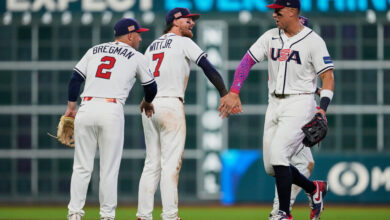
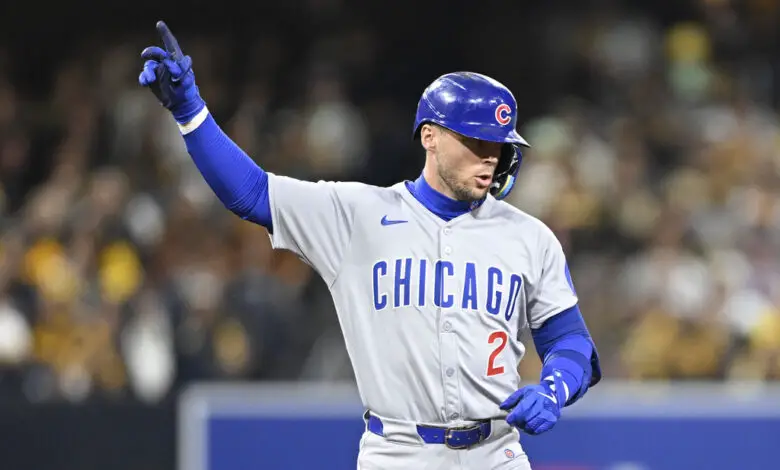
Imagine making a list of the top 100 players in MLB and leaving off the player who ranked 20th last season with 4.8 fWAR and whose 17.5 fWAR since the start of the 2022 season ranks 18th overall. That would be Nico Hoerner, who was conspicuously absent from MLB Network’s recent list of the best players in the game. Alex Bregman, who has the exact same WAR figure over the last four seasons, came in at No. 35.
Bregman is the highest-ranked Cub, followed by Pete Crow-Armstrong at 40, Michael Busch at 67, and Seiya Suzuki at 77. Adding to the absurdity of this list are Yankees first baseman Ben Rice at 95 and Cardinals catcher Iván Herrera at 98. I get that a lot of this stuff is created as rage-bait to get people talking about it, but leaving Hoerner off the list entirely is an act of abject stupidity.
Rangers Swing Huge Trade
The Rangers swung a huge trade for lefty MacKenzie Gore yesterday, sending five prospects to the Nationals for two years of a rotation stalwart who had been on the Cubs’ radar. Texas parted with shortstop Gavin Fien, right-hander Alejandro Rosario, first baseman/outfielder Abimelec Ortiz, infielder Devin Fitz-Gerald, and outfielder Yeremy Cabrera in the deal. As Alex Cohen pointed out, using equivalent prospect rankings would have seen the Cubs trade away Jaxon Wiggins, Jonathon Long, Hartshorn, Reid, and Kane Snell.
Cubs Sign McCormick to Minors Deal
The Cubs have signed former Astros outfielder Chas McCormick to a minor league deal that includes an invitation to spring training. Beyond sounding like the jerk college boyfriend in a high school rom-com, the 31-year-old McCormick is something of a late bloomer who really broke out across his first three seasons before struggling badly over the last two years.
Some believe he’s got a good shot at breaking camp with the Cubs as a veteran right-handed hitter, but I think that only happens if he puts up a pretty overwhelming performance in Mesa. His primary competition is Kevin Alcantara, who is younger and also right-handed, plus there’s the issue of McCormick’s service time. Even though he’s got two options left, getting 11 more days of service time gets him to five years and the right to approve a demotion to Triple-A.
Alcántara qualified for a fourth option and could thus be stashed in Iowa, so that’s really the only thing I can see working in McCormick’s favor. The Cubs also picked up Justin Dean off waivers, though he’s very much a speed guy who doesn’t figure to contribute with the bat. I see the McCormick and Dean additions as insurance in case Alcántara becomes yet another hot outfield prospect who doesn’t pan out.
More News and Notes
- Shortly after designating him for assignment, the Twins traded former Cubs great Vidal Bruján to the Mets for cash.
- In order to make room for Bruján on the roster, the Mets DFA’d former Cubs great Richard Lovelady.
- Max Scherzer would like to pitch in 2026, but he told Ken Rosenthal that he’s willing to wait until after the season starts to ensure he can land with the right team. This feels like Brett Favre constantly bickering over contract stuff just because he didn’t want to bother with camp. Now we just have to see if Scherzer tries to defraud his home state’s welfare department.
- Multiple outlets have reported that Freddy Peralta is open to signing an extension with the Mets, which Tim Britton and Will Sammon of The Athletic believe could be something like four years and $112 million in new money.
- The White Sox turned their LuBob savings into a closer, signing righty Seranthony Dominguez to a two-year, $20 million deal.
Trailer Time
Yesterday’s selection featured a new take on an 80s phenomenon, so I thought I’d throw it back to ’85 for a look at a cult classic that’s so bad it’s good. Actually, it’s just bad. The plot has more holes than Matt Nagy’s explanations for his team’s failures, the acting leaves a lot to be desired, and the trailer basically lays out the whole movie. If we’re being honest, this flick has only ever been relevant because of one iconic scene.
Star Joyce Hyser was 27 or 28 when the movie came out, but at least she looked youngish enough. Her college boyfriend was played by Leigh McCloskey, who was 30 and very much appeared so. Hyser was dating Bruce Springsteen at the time, hence the posters of The Boss on the walls. She later moved on to Warren Beatty, though he doesn’t appear in the movie.
Other than Hyser flashing her breasts near the end, this movie is probably best known as being the second of William Zabka’s school-bully trifecta. JOotG fell between The Karate Kid and Back to School, both of which have managed age just a little better. You can catch this un-classic on the Roku Channel with limited commercial interruptions.